Arcade games are the oldest idea in video gaming: a simple goal, an escalating challenge and a score that begs to be beaten. You do not need a tutorial to understand a brick breaker, a snake game or a maze chase. You see the screen, work out the rule within a few seconds and then spend a long time getting better at it.
What makes a good arcade game is feedback. Every action should have an immediate result you can see and hear: a brick breaking, a coin collected, a ghost turning blue. Our arcade games are built around that loop. They use short rounds, so you can play for two minutes or twenty, and they save your best score in your browser so there is always a number to chase.
On a phone, arcade games rely on touch, and the controls are designed for thumbs: swipes, taps and on-screen pads. On a computer, most also support the keyboard. If you are new to the genre, start with a game that has forgiving controls and a slow start, then move on to the fast ones.
How to get started
- Start with games that have one control, such as a single tap, and then move to games with steering.
- Play in short sessions. Reflex games get worse, not better, when you are tired.
- Study how the difficulty rises. Most arcade games repeat patterns that you can learn.
All arcade games (15)









What each game is about
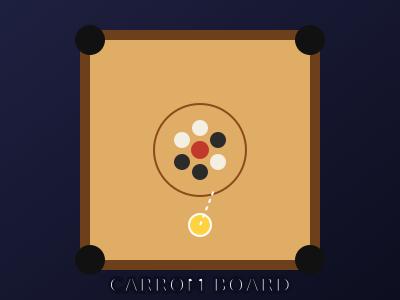
- Carrom Board — Flick the striker and pocket all your coins before the computer. Realistic carrom physics with slingshot aiming and the red queen bonus.
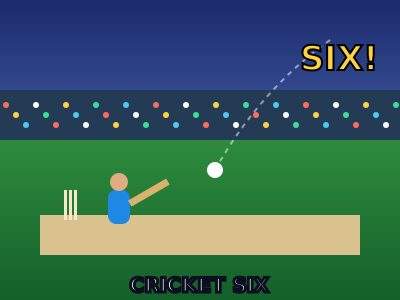
- Cricket Six — A one-tap cricket batting game. Time your swing to hit sixes and fours, chase the target in 12 balls and share your score with friends.
- Patang Pech — Two players on rooftops, pech lagi gayo! Use khech and dheel to cut the rival kite string before yours snaps. Play 2 player on one phone or against the computer.
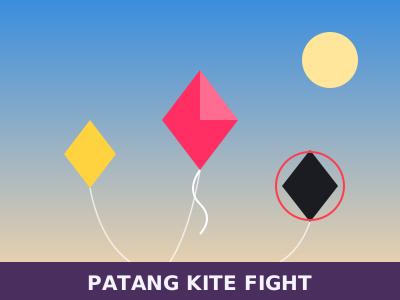
- Patang Kite Fight — The Indian kite-flying festival as a game. Fly your patang, cut rival kites, dodge black manjha kites and shout Woh Kata! Perfect for Makar Sankranti and Uttarayan.
- Helix Drop — Spin the tower and guide the bouncing ball down through the gaps. Avoid the red zones and build a combo to smash through everything in a blazing fireball.
- Color Hop — Tap to hop a ball upward through spinning rings and sliding bars, passing only the colors that match your ball. A one-tap reflex challenge.
- Dot Muncher — A classic maze chase. Eat every dot, grab power pellets and turn the tables on four ghosts with their own personalities. Swipe or use arrow keys.
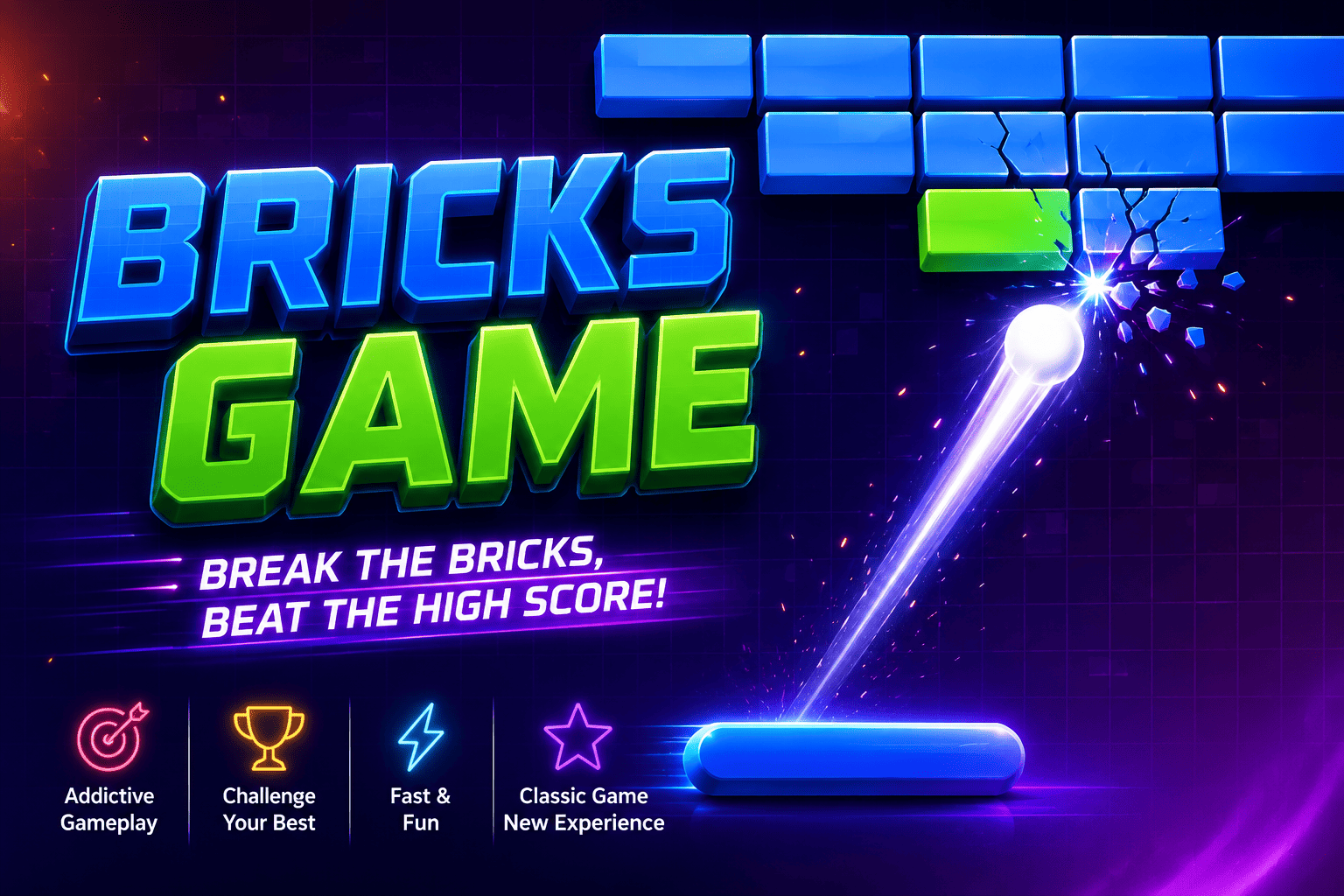
- Bricks Games — Break colorful bricks, collect power-ups, and beat every level in this fun arcade challenge!
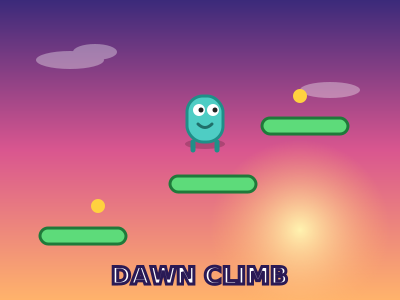
- Dawn Climb — An endless climbing platformer — jump higher, dodge the fall, and chase your best altitude. Play free in your browser, no download required.
- Neon Snake — A neon-lit twist on the arcade classic. Guide your snake, gobble glowing orbs, and avoid crashing into your own tail. Fully playable with keyboard, on-screen buttons, or swipe gestures.
- Meteor Dodge — A survival game with one rule: don't get hit. Pilot a glowing orb through an accelerating meteor storm — and squeeze close for near-miss bonuses, because hiding in a corner is the lowest-scoring way to play.
- Hoop Shot — Basketball physics against a shot clock. Drag back and release like a slingshot — a dotted arc previews the real trajectory. Swishes beat bank shots, streaks multiply up to 10×, and every basket buys back time.
- Air Hockey — Arcade air hockey with real puck physics — your paddle's momentum is transferred into the puck, so a fast swing drives it and a soft touch controls it. First to seven, three difficulties.
- Sky Jumper — An endless procedural platformer. Run right, jump the gaps, dodge spikes and grab coins, with coyote time and jump buffering for tight, fair controls.
- Road Hopper — An endless lane-crossing arcade game. Hop through traffic, ride drifting logs across the river, and see how far you can get before you're hit or fall in.
Guides for arcade games
Reaction Time and Aim: What the Tests Measure and How to Improve
What a reaction-time test really measures, why your result varies, and simple ways to improve your reaction speed and aiming accuracy.
SkillsHow to Type Faster: Accuracy, Posture and Practice Habits
A realistic plan to raise your typing speed: why accuracy comes first, home-row technique, posture, and how to practise with typing tests.
TechnologyBrowser Games vs Mobile Apps: Why HTML5 Games Work So Well
How HTML5 browser games work, why they load instantly, how they save your progress, and when a browser game is a better choice than an app.