Cricket is played in stadiums, on streets, on terraces and, in one famous form, with nothing but two hands. Hand cricket, also known as odd-even or finger cricket, is the game that children across India play at school and at home whenever there is no ball, no bat and no ground. This guide explains the rules, shows how to think about the guessing, and then covers timing tips for the one-tap batting game Cricket Six. Both are on OnlinePlayZone.
The rules of hand cricket
Two players play at the same time. On each turn, both show a number from one to six, using one hand, by holding up that many fingers, with a closed fist and a thumbs-up often standing in for six. The numbers are revealed simultaneously on a count of three.
- The toss. One player calls odd and the other even. Both show a number, and the total decides the toss: an odd total means the player who called odd wins.
- Batting. The winner of the toss chooses to bat or bowl. The batter is trying to score runs.
- Scoring. If the numbers are different, the batter scores the number shown by the batter.
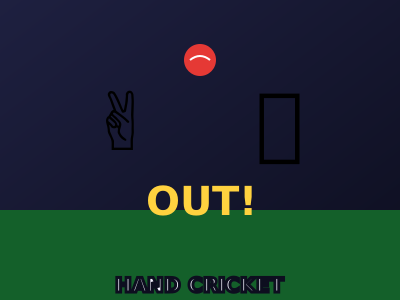
- Out. If the numbers are the same, the batter is out.
- The chase. After one innings, the other player bats and tries to beat the target.
In the classic version each player has one wicket, which means a single matching pair of numbers ends the innings. Some groups play with two or three wickets for longer games.
The psychology of the numbers
Hand cricket looks like pure guessing, but it is really a game about patterns. Because people are poor at being random, a batter who picks six every time will soon meet a bowler who also shows six. A bowler who always shows the same number will be exploited by a batter who avoids it.
The best approach is to mix your numbers in a way that is hard to predict. Do not follow a simple cycle such as one, two, three. Do not repeat the same number too often, and also do not avoid repeating it, since a bowler who expects a change will switch. Some players pick numbers by thinking of something unrelated, such as the number of letters in a word they see, to break their own habits.
Batting strategy
- High numbers score more but are also what the bowler expects the batter to go for late in the innings. Mix big and small numbers.
- When chasing a small target, you do not need sixes. Low numbers keep you safe while the total creeps closer.
- When you need a few runs on the last ball, you know the exact number you need, which means the bowler can guess it too. Think about whether to take the obvious number or the surprise.
Bowling strategy
- Watch what the batter showed on the last few balls. Many players repeat or avoid a number they used just before.
- Early in an innings, keep your numbers varied. Late in a chase, think about what the batter needs.
- If the batter has built a big total with sixes, the batter is likely to keep trying them.
The computer opponent
In the Hand Cricket game on OnlinePlayZone, the computer mixes random picks with a slight preference for big numbers when batting, and it tries to pick the exact number needed when only a few runs remain. When bowling, it sometimes repeats its previous pick. Noticing these habits helps you choose better numbers.
Cricket Six: timing is everything
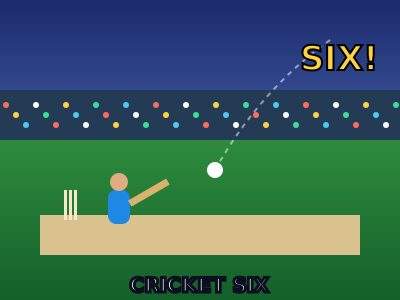
Cricket Six is a one-tap batting game. A bowler runs in, the ball bounces, and you tap when it reaches the bat. The closer your tap is to the perfect moment, the better the shot: perfect timing sends the ball out of the ground, good timing finds the boundary, and a mistimed shot gives singles or a catch. You have twelve balls and three wickets to chase a target, and each successful chase raises the target.
The first thing to learn is to watch the ball and not the bowler. After the ball bounces it travels in a predictable line, and the dotted circle near the bat shows where to meet it. Speed changes between deliveries, so a slow ball needs more patience: tapping early against a slow ball is the most common mistake. Yorkers arrive low and fast, so be ready to react quickly. Finally, find a rhythm: tap with the same relaxed motion each time rather than reacting to the pressure of the scoreboard.
Safe risk-taking
When you are close to the target, a safe single is worth more than a wild swing, because wickets are limited. When you need many runs from few balls, take bigger risks. This is the same decision cricket captains make in real matches, and the game gives you a small taste of it.
Share the fun
Both games have buttons to share your score with friends. Cricket is a social sport, and a good score is meant to be shown off. Challenge a cousin, a classmate or a friend, and see whose timing and nerves are better.
Frequently asked questions
How is a toss decided in hand cricket?
Both players show a number from one to six with their fingers at the same moment. One player has called odd and the other even. If the total matches the call, that player wins the toss.
Why do the same numbers mean out?
In hand cricket, the batter is out when the bowler shows the same number. That single rule creates all of the tension, because every ball is a small guessing game.
How do I time sixes in Cricket Six?
Tap just as the ball reaches the dotted circle near the bat. The closer your tap is to the perfect moment, the better the shot.